
Friday afternoon at Real Club de Campo Villa de Madrid. Barely one hundred metres separate the ninth and eighteenth greens, two settings where, just ten minutes apart, two players faced the final hole of their second round with much more than their score on the line. Neither name appeared near the top of the leaderboard, yet their stories explain the compassion and cruelty of golf far better than any result could.
The protagonists of our story are Eddie Pepperell and Sebastian Desoisa. The former is a veteran of the European circuit, a battle-hardened campaigner accustomed to the demands of a sport that offers precious little respite. The latter is a 19-year-old amateur just beginning to discover what it means to compete among the best. One is fighting to keep going. The other is dreaming of getting started. On Friday, both encountered an eighteenth hole they are unlikely ever to forget.
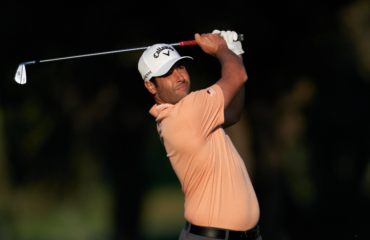
Pepperell arrived first. The Englishman is in Madrid thanks to a last-minute invite. He sits at 101st in the Race to Dubai, an uncomfortably close position to the line drawn beneath the top 100 players who retain their playing rights for next season. To make matters worse, the Englishman is not guaranteed a place in any of the final four events on the calendar. In other words, Madrid could be his last chance to turn around a season that threatens to leave him without a tour card.
In this context, Pepperell stood on the ninth tee one shot outside the cut line. Thirty-five holes of battle had left him with one final chance to extend his week. A birdie would allow him to play at the weekend and give him two more rounds in which to scrape together the points that could define an entire season. Any other score would probably mean saying adios to Madrid, to his season and, who knows, perhaps even to his status as a DP World Tour player.
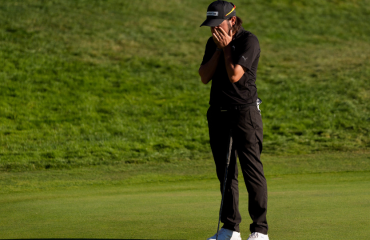
After a superb iron from the tee, the Englishman faced a ten-foot putt to seal his fate, by no means a straightforward task. He was almost pin high and the break demanded his full attention. In truth, though, the real difficulty lay neither in the distance nor the break. It lay in everything riding on that one shot. Pepperell took his time. Two short practice strokes, one final look, then he sent the ball on its way and it rolled into the centre of the cup.
Birdie. Cut made. Two extra lives. Pepperell clenched his fist in a mixture of defiance and relief. He knew exactly what he had just achieved. He had not won a tournament, nor was he anywhere near the top of the leaderboard, but his putt was worth far more than a single birdie. The kiss he then shared with his wife, who is caddying for him this week in Madrid, completed a story the numbers on their own could never tell.
It was an example of the kinder side of golf: the veteran who refuses to give in, who finds one last opportunity when he is well and truly on the ropes, and who earns himself another 36 holes in which to keep fighting for his future.
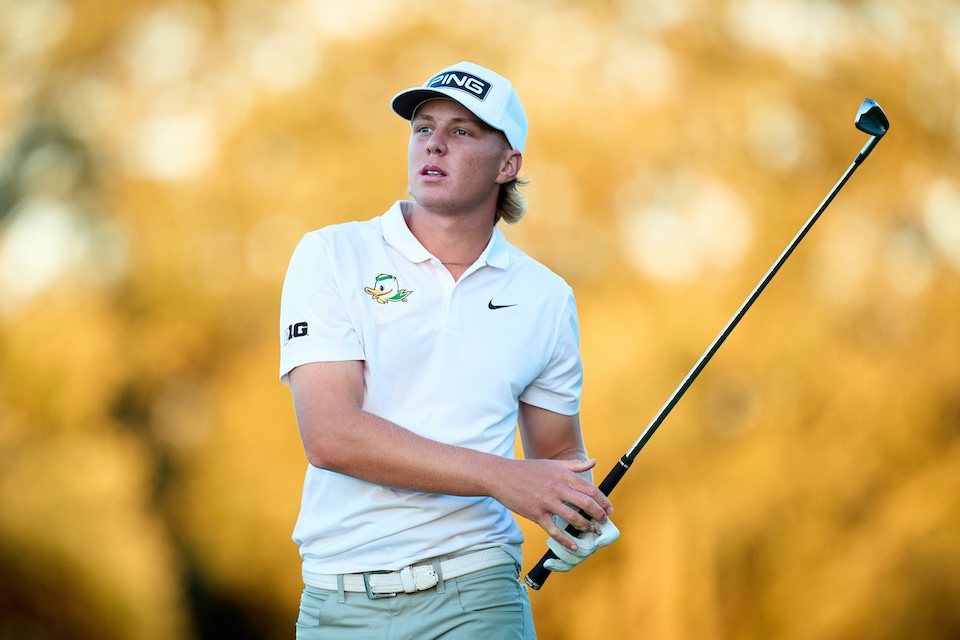
As Eddie was on his way to sign his card, Sebastián Desoisa was teeing his ball up on the 18th. His situation was entirely different, although the setting and the pressure were strikingly similar. The young Gibraltarian, who learned the game in Andalusia, was reaching the conclusion of an extraordinary two days on the course. At 19 years of age, and still an amateur, he had produced two rounds of exceptional quality in one of the most important events on the European calendar. He had played without inhibition, refused to be daunted by the occasion and gone toe to toe with professionals who had hundreds of tournaments behind them. It is hard to grow tired of watching his superb birdie on the 16th.
Desoisa reached the final hole one shot inside the cut. Within his grasp was something he could scarcely have imagined a few days earlier; making the cut for the first time at a DP World Tour event. But there was even more at stake. Sergio Jiménez and Gonzalo Baños, the other two amateurs in Madrid, had both failed to reach the weekend. Making the cut would therefore also secure him the Vallejo Cup, awarded to the leading amateur at the Spanish Open.
It was all there, within his grasp. He did not even need a par, a bogey would be enough to keep playing on Saturday and Sunday. Seventeen holes of extraordinary golf had presented him with a magnificent opportunity. Only one hole remained.
But then the cruel side of sport showed its face, the one that cares nothing of age, experience or merit. The young golfer felt the pressure, which is to be expected. It would be odd if he did not. Because however talented a player may be, however well he may have played for two days, some things can only be learnt through experience.
Desoisa endured a nightmare of a hole and eventually signed for a triple bogey. Three dropped shots that completely changed the outcome of his week. In a matter of minutes, he went from making his first cut on the DP World Tour and having the Vallejo Cup virtually in his hands to leaving the tournament before the weekend. It hurts just to think about it.
He had played so well. He had shown over 35 holes that he has more than enough game to compete on a stage this demanding. And he had come so close to a prize that would surely have meant so much to a player whose journey is only beginning.
However, it would be deeply unfair to reduce his Open de España to that final hole. He leaves knowing that he can compete with players he has probably spent years watching on television. What happened on the 18th hole on Friday will hurt, and it will probably continue to hurt for some time, but it is also one of those experiences that forge great golfers.
On two greens barely one hundred metres apart, and within only a few minutes of each other, a 35-year-old man found an opportunity to prolong his career while a 19-year-old received one of the first great lessons of his own. Two generations, two fates and the two faces of a sport that can be as cruel as it can be kind.